

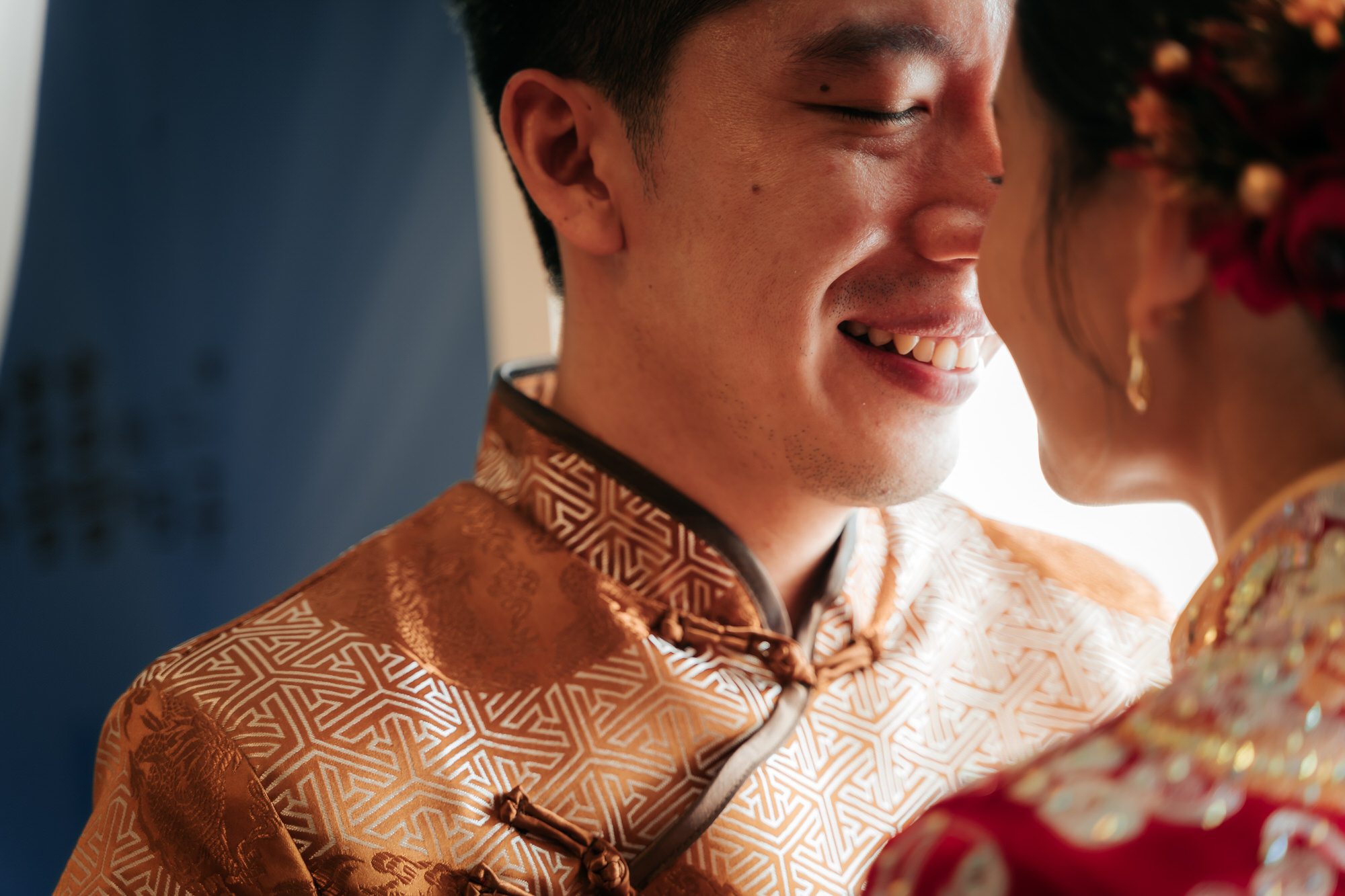
Gatecrash, tea, ceremony, dinner
Chinese Wedding Day Timeline Malaysia
A Malaysian Chinese wedding day can be joyful, loud, emotional, and very compressed. This guide helps couples plan the photography timeline from morning preparation and gatecrash to tea ceremony, ROM or church, portraits, hotel dinner, speeches, yam seng, and the last table hugs.
This page supports the Chinese wedding photography cluster by answering a planning query that couples search before booking. Timeline content is valuable because it turns SEO traffic into qualified enquiries. Couples who understand how long tea ceremony, family portraits, travel, and dinner prep take are more likely to choose the right coverage hours and avoid a rushed wedding day.
JONAJEAN plans Chinese wedding photography around people first: parents, grandparents, siblings, heng dai, ji mui, relatives, and the couple trying to stay present through a very full day. The timeline should create space for emotion, not only fit rituals into boxes. Every family has its own customs, so use this as a practical framework rather than a strict rulebook.
Timeline blocks
Core parts of a Chinese wedding day
Morning preparation
Details, makeup, family interactions, letter reading, kua or gown portraits, and parent moments all need space before games begin. Rushing the morning makes the whole day tense.
Gatecrash and tea
Door games and tea ceremony need different coverage energy. Games are fast and chaotic. Tea ceremony is slower, respectful, and built around elders, serving order, and family reactions.
Ceremony and dinner
ROM, church, garden ceremony, hotel reception, table photos, speeches, performances, and yam seng should be connected with travel buffer so photography does not become survival mode.
JONAJEAN approach
Build time for the moments between rituals
The best Chinese wedding photographs often happen between official items: a parent watching makeup finish, the groom waiting outside the door, siblings laughing after the games, elders adjusting the couple during tea, and the couple exhaling in the car. A timeline that is packed too tightly removes those moments before they can happen.
For Penang and Malaysia weddings, travel can quietly destroy a schedule. Moving between two family homes, a church, hotel, portrait location, and ballroom needs realistic time. Parking, lift waiting, makeup delays, and family gathering all matter. We build coverage suggestions with those real frictions in mind.
If your day includes two ceremonies or multiple outfit changes, decide which moments are most important before the wedding. That helps us protect the story instead of chasing every possible photograph.

Sample sequence
A workable Chinese actual day flow
- Start with preparation, details, parents, bridesmaids or groomsmen, and a short quiet portrait set.
- Move into gatecrash games with enough space for reactions, not only the challenge itself.
- Plan tea ceremony order before the day and keep a helper ready to call relatives.
- Add ceremony, lunch, rest, or portrait buffer depending on your family and venue plan.
- Treat dinner as a story: room, entrance, speeches, table moments, yam seng, hugs, and after-party energy.
Next useful pages
Next pages for Chinese wedding planning
Timeline searches should lead naturally to tea ceremony details, package hours, cost, venues, and full wedding coverage.
Decision notes
A Chinese wedding timeline should protect family emotion
Many Malaysian Chinese wedding timelines are built around logistics first. That is necessary, but emotion needs space too. If the morning has no breathing room, parents, grandparents, and siblings are photographed only while rushing. If dinner starts immediately after travel, the couple has no quiet portrait time before the room fills.
A better timeline gives each ritual a small buffer and names the moments that matter most. JONAJEAN uses that priority list to decide where documentary coverage should lead and where gentle direction is needed. The result is a gallery that remembers the family, not only the schedule.
- Put family order, home addresses, and ceremony times into one shared plan.
- Leave space after gatecrash for real greetings before tea begins.
- Confirm if lunch, rest, or outfit change is realistic before dinner prep.
- Protect at least one unhurried portrait window with the couple.
Questions couples ask
Practical answers before you enquire
How early should Chinese wedding photography start?
Start early enough to cover preparation, family, details, and natural portraits before door games begin. Exact timing depends on makeup schedule and first ceremony time.
How long does tea ceremony take?
It depends on number of elders and family groups. A small ceremony can be quick, while two homes or many relatives need much more time and a helper to manage order.
Should couple portraits happen before or after tea ceremony?
Both can work. Before tea gives cleaner, cleaner portraits. After tea may feel more emotional but can be tighter if travel or lunch begins quickly.
Can JONAJEAN help build the timeline?
Yes. Share ceremony times, home locations, venue details, and dinner program. We can help suggest realistic coverage flow.
Enquiry prep
What to send for Chinese wedding timeline help
A Chinese wedding timeline works only when family structure and movement are understood. Send the practical details early so we can see where the day is tight, where emotion needs room, and whether the photography package should cover morning, ceremony, dinner, or everything together.
- Bride and groom preparation locations and first ready time.
- Gatecrash plan, tea ceremony order, and number of homes.
- ROM, church, garden, or hotel ceremony time if included.
- Dinner march-in time, speeches, yam seng, and table photo expectations.
Work with JONAJEAN
Need a Chinese wedding photography timeline?
Send your family locations, ceremony times, and dinner plan. We will help shape a realistic flow around the people and rituals that matter.